11 Groundcovers That Take Over So Weeds Don’t Stand a Chance
Weeds thrive where soil is bare, sunlight hits the ground, and moisture is available. The smartest way to stop them isn’t constant pulling or chemicals — it’s competition.
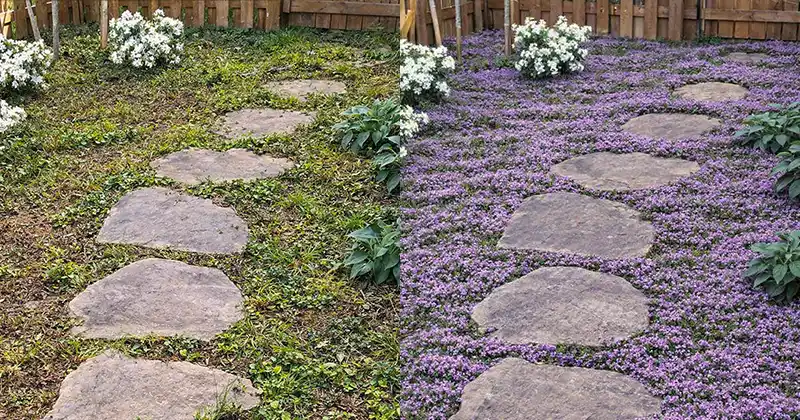
Groundcovers act like living mulch. They spread, shade the soil, block weed seeds from germinating, and form dense root systems that leave no room for invaders. Once established, many of them reduce maintenance, save time, and make your garden look fuller and healthier.
Below are 11 of the most effective and commonly used groundcovers that naturally suppress weeds while adding beauty and structure to your landscape.
Why Groundcovers Beat Weeds So Effectively
Before choosing plants, it helps to understand why groundcovers work so well:
- They block sunlight from reaching weed seeds
- They occupy soil space, leaving no gaps
- They stabilize moisture levels
- They prevent erosion
- They reduce the need for mulch
- They create a self-maintaining system over time
Now let’s look at the strongest performers.
1. Creeping Thyme (Thymus serpyllum)
One of the most popular groundcovers in the world.
Creeping thyme forms a low, dense mat and produces small purple, pink, or white flowers. It spreads slowly but steadily and becomes extremely thick once established.
Advantages:
- Walkable
- Drought tolerant
- Attracts pollinators
- Strong weed suppression
- Thrives in poor soil
Perfect for pathways, rock gardens, and sunny borders.
2. Creeping Jenny (Lysimachia nummularia)
This fast-spreading groundcover forms a carpet of bright green or golden leaves.
Advantages:
- Extremely fast coverage
- Grows in sun or shade
- Excellent for slopes and damp areas
- Strong erosion control
Best for areas where you want rapid filling — just keep it contained.
3. Periwinkle (Vinca minor)
A classic evergreen groundcover with purple or blue flowers.
Advantages:
- Grows in deep shade
- Dense root system
- Evergreen coverage
- Suppresses aggressive weeds
Excellent under trees where grass fails.
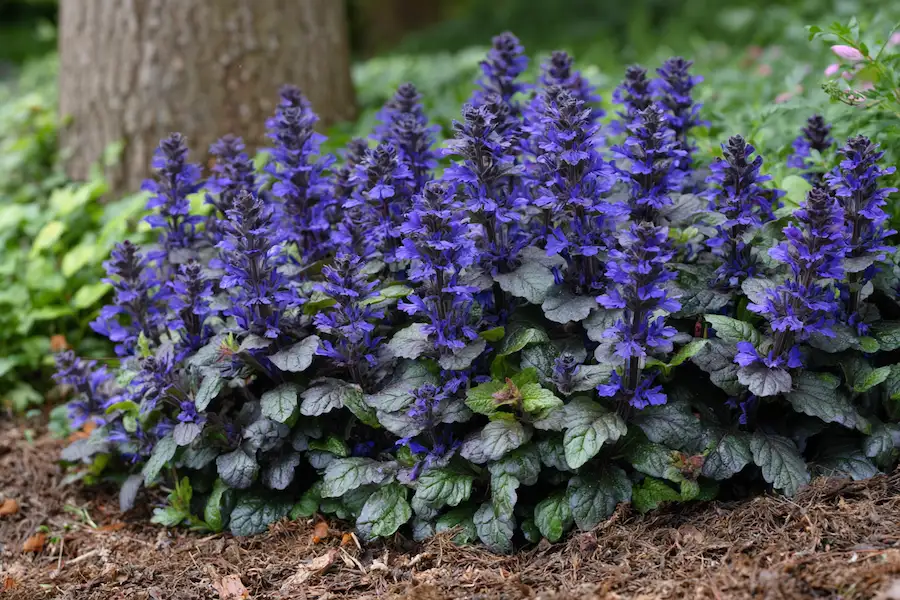
4. Bugleweed (Ajuga reptans)
Bugleweed spreads by runners and forms a tight mat of colorful foliage.
Advantages:
- Shade tolerant
- Fast spreading
- Decorative leaves (purple, bronze, green)
- Spring flowers attract bees
Very effective for large shaded areas.
5. Sweet Woodruff (Galium odoratum)
A soft-looking plant that is tougher than it appears.
Advantages:
- Thrives in shade
- Forms thick carpets
- Pleasant scent
- Prevents soil compaction
Great under shrubs and forest-style gardens.
6. Sedum (Stonecrop)
Succulent groundcovers are unbeatable for dry conditions.
Advantages:
- Requires little water
- Survives heat and drought
- Dense growth habit
- Long-lasting flowers
Ideal for sunny, dry areas and poor soils.
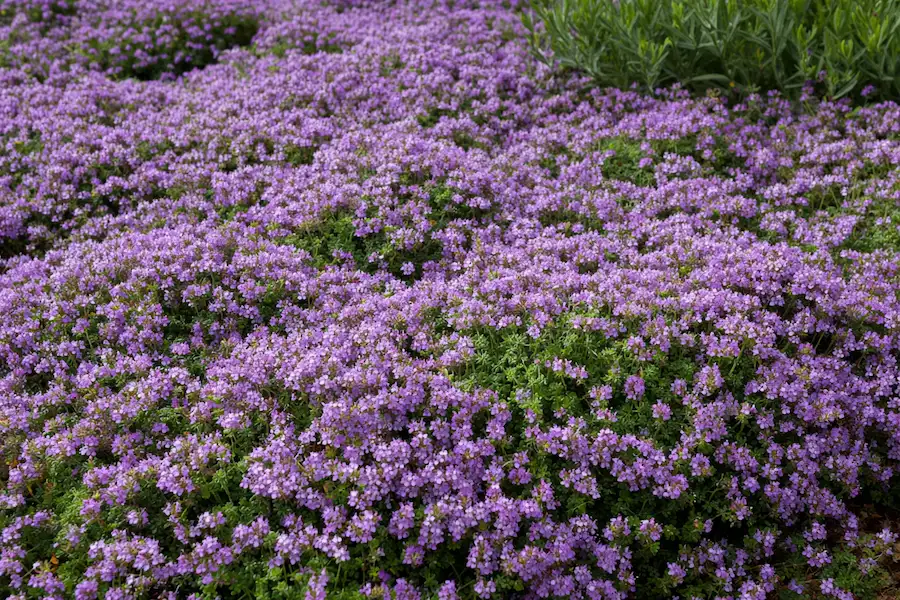
7. Mazus
A low-growing flowering carpet that fills cracks and open spaces quickly.
Advantages:
- Grows between stepping stones
- Fast coverage
- Low height
- Soft appearance with tough performance
Excellent for decorative paths.
8. Pachysandra
A shade-loving evergreen groundcover widely used in landscaping.
Advantages:
- Thick foliage
- Grows under trees
- Low maintenance
- Long lifespan
Forms solid weed-proof coverage within 1–2 seasons.
9. Clover (White or Microclover)
Often overlooked, clover is one of the best natural weed suppressors.
Advantages:
- Fixes nitrogen in soil
- Extremely dense growth
- Improves soil quality
- Walkable
- Drought resistant
A smart choice for lawns and open spaces.
10. Ice Plant (Delosperma)
Bright flowers and succulent leaves form a living carpet.
Advantages:
- Excellent drought tolerance
- Long blooming season
- Strong root coverage
- Thrives in sandy soil
Perfect for hot climates.
11. Dianthus (Low-growing varieties)
Compact flowering plants that spread into tight clusters.
Advantages:
- Strong visual impact
- Fragrant blooms
- Moderate spreading habit
- Great between stones and borders
Adds color while blocking weed growth.
How to Get the Best Weed-Blocking Results
To maximize success:
- Remove existing weeds first
- Plant groundcovers closely (not too far apart)
- Water well for the first few weeks
- Add light mulch until plants establish
- Trim edges if needed
Within one growing season, many of these plants will form a living shield.
Nature hates empty space. Weeds take advantage of it — unless you fill it first.
Groundcovers are one of the smartest long-term gardening strategies:
- Less work
- Healthier soil
- Fewer chemicals
- Better moisture retention
- Beautiful results
Choose the right plant for your climate and light conditions, and let it do the hard work for you.
In the battle against weeds, coverage wins.