The Ultimate Homemade Plant Growth Booster for Your Vegetable Garden
If you want your vegetable garden to grow faster and produce more vegetables than ever before, the secret might already be sitting in your pantry. Instead of relying on expensive store-bought fertilizers, you can easily create a highly effective, homemade plant growth stimulant. This simple mixture acts as a soil biology accelerator. By feeding the beneficial microbes in your soil, it brings the dirt in your garden to life and provides your plants with exactly what they need to thrive.
The Power Behind the Ingredients
This formula uses common household items to create a rich, nutrient-dense boost for your plants. Each ingredient plays a specific role in accelerating plant growth and improving overall soil health.
- Active Dry Yeast (1 Tablespoon): This is the absolute most important ingredient. Yeast acts as a microbial activator. It feeds on sugars to multiply rapidly, releasing valuable enzymes, organic compounds, and B vitamins directly into the soil. It also unlocks existing nutrients in the dirt so your plants can absorb them more easily.
- Molasses (2 Tablespoons): Molasses feeds the yeast so it can grow and multiply. Unlike plain white sugar, molasses also contains valuable minerals like iron, potassium, calcium, and magnesium. This ensures a slow, extended release of nutrients into the dirt. You can substitute natural cane sugar or white sugar if molasses is unavailable.
- Buttermilk (1 Cup): Buttermilk is an excellent calcium delivery system. It helps prevent common garden problems like blossom end rot—which is incredibly common in tomatoes—while strengthening the plant’s cell walls. It also introduces beneficial lactic acid bacteria to the soil ecosystem.
- Baking Soda (1 Tablespoon): This common baking staple acts as a gentle pH modifier and a fungal control agent. It slightly raises the soil’s pH at the surface level, reducing the chances of plant disease and stabilizing the root zone.
- Pure Water (1 Gallon): You must use lukewarm water (around 90 to 95 degrees Fahrenheit). Avoid using chlorinated or fluorinated tap water, as the chemicals can kill the beneficial microbes. Use collected rainwater or pure spring water instead.
Optional Additions
To make this homemade mixture even more potent, you can include these simple extras:
- Wood Ash (1 Teaspoon): Adds extra essential minerals to the soil.
- Epsom Salt (1 Teaspoon): Provides extra magnesium and potassium, which results in greener leaves, stronger photosynthesis, and ultimately sweeter vegetables.
How to Make the Homemade Booster
Follow these steps closely. It is highly important that you do not add extra yeast to this mixture. An overload of microbes can actually harm your plants by causing an imbalance in the soil, which leads to heavy leafy growth but very few actual vegetables.
- Prepare the Water: Pour your 1 gallon of lukewarm, pure water into a large container or bucket.
- Mix the Sugar: Add the 2 tablespoons of molasses (or your substitute sugar) to the warm water. Stir thoroughly until it is completely dissolved.
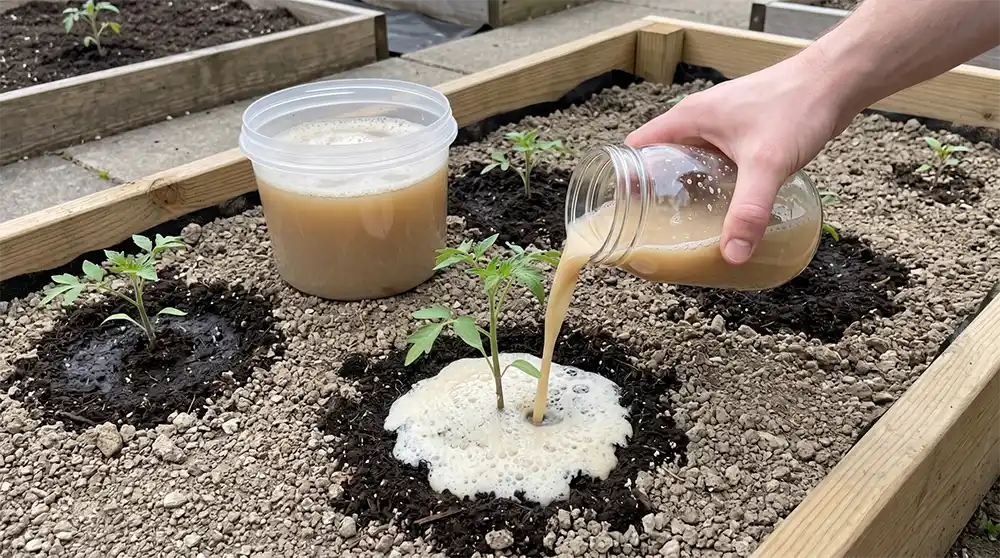
- Activate the Yeast: Sprinkle the 1 tablespoon of active dry yeast evenly across the top of the water. Do not stir it in; allow it to spread across the surface area.
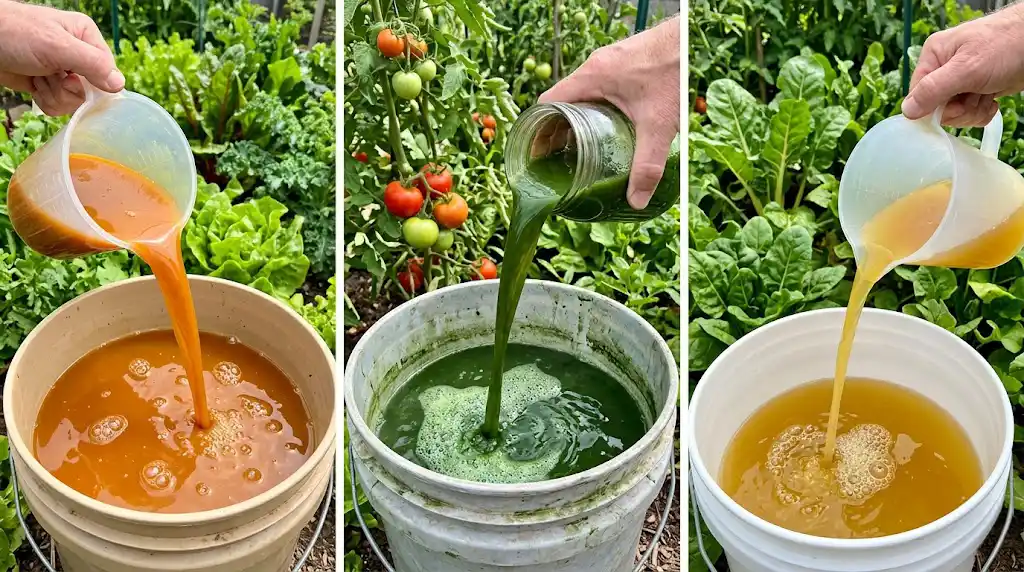
- Let it Rest: Allow the mixture to sit undisturbed. For the absolute best results, let it rest overnight. At a minimum, give it two hours. You will know the yeast is activated when a thick, beer-like foamy layer appears on the top of the water.
- Add Final Ingredients: Once the yeast is fully activated and foamy, gently stir in the 1 cup of buttermilk and the 1 tablespoon of baking soda. If you are storing this in a glass jar, do not screw the lid on tightly, as the built-up gases from the yeast could cause the glass to crack or explode.
Proper Application and Watering Guidelines
Applying this mixture correctly is just as important as making it. Always water your garden lightly with plain water before applying this booster to prevent shocking the plant roots or overloading the soil microbes.
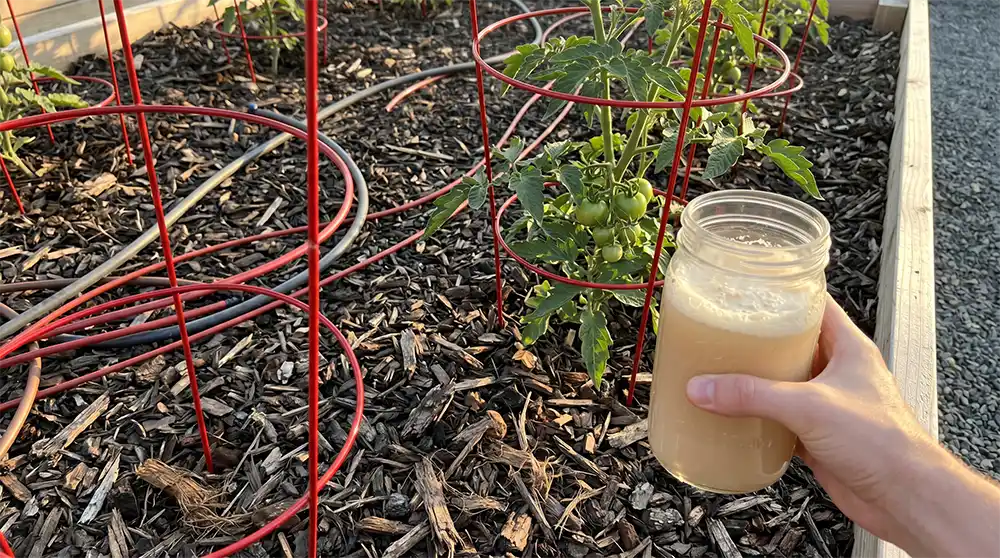
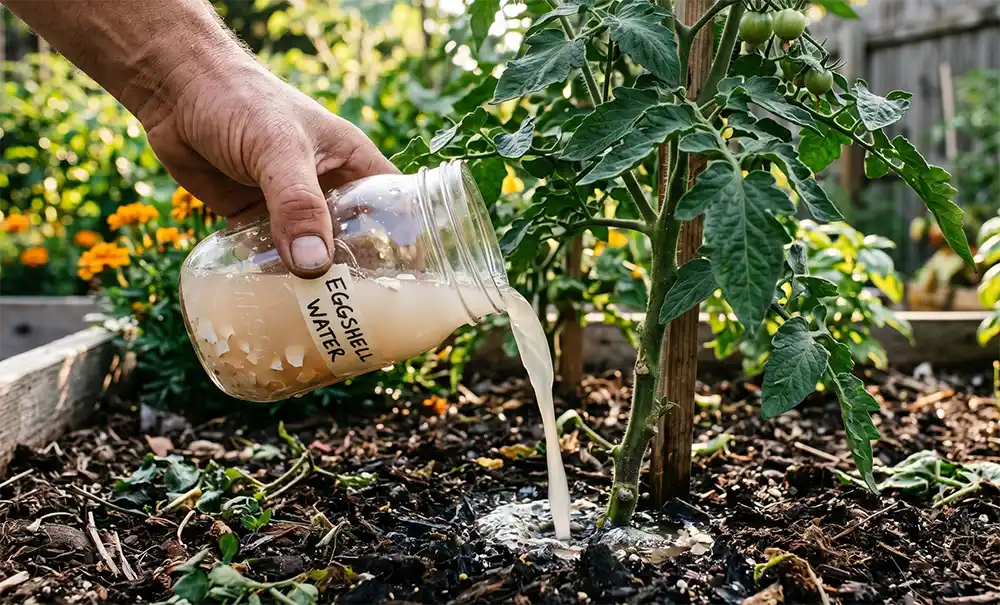
Never pour the mixture directly onto the plant’s leaves or right against the main stem coming out of the ground. Instead, pour it onto the soil about a quarter of an inch away from the base of the plant. Furthermore, you should apply the mixture early in the morning or late in the evening. Avoid watering during the middle of the day when the sun is hottest and the plants are most stressed.
Dosage Based on Plant Size:
You can apply this booster alongside your normal watering routine once or twice a week, using the following amounts:
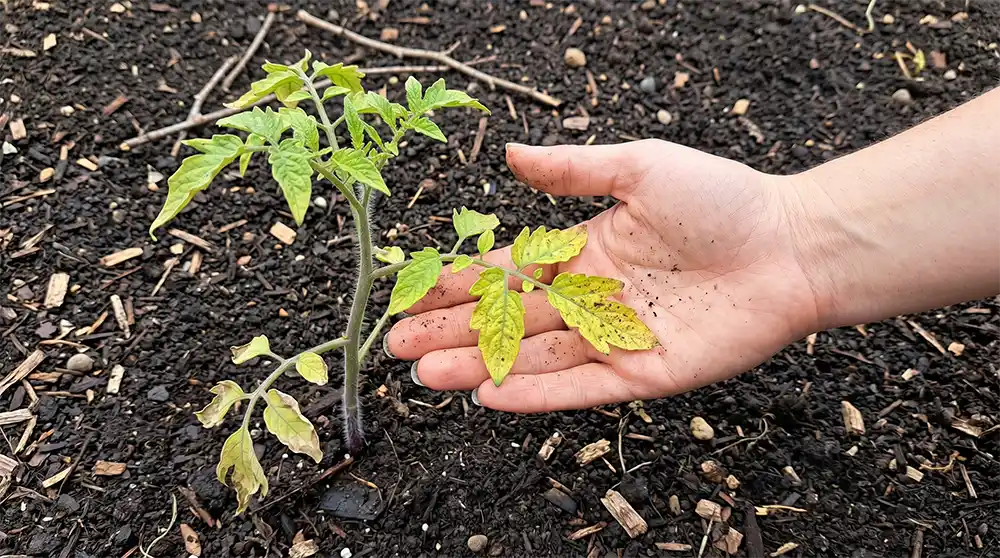
- Tiny Seedlings: Use just a few drops per plant to avoid root shock.
- Small Plants: Use one-quarter of a cup per plant.
- Medium Plants (up to 1 foot tall): Use one-half of a cup per plant.
- Mature In-Ground Plants: Use one full cup of the mixture per plant.
What to Expect
When you stick to the recipe and apply it consistently, the results are rapid and highly visible. Within 7 to 10 days, you will notice significantly greener leaves and a faster overall growth rate. By weeks two and three, your plants will develop thicker, stronger stems and heavier branching. Within three to four weeks, expect an explosion of new flowers and significantly better fruit production. By simply boosting your soil’s biology naturally, your vegetable garden will grow substantially larger and yield a much richer harvest.