Using Hanging Fat to Protect Fruit Trees Naturally
Hanging a small piece of animal fat in fruit trees is an old, simple technique that helps control pests naturally by attracting insect‑eating birds. It does not poison insects, does not harm the tree, and does not disturb the soil. Instead, it works by strengthening nature’s own pest‑control system.
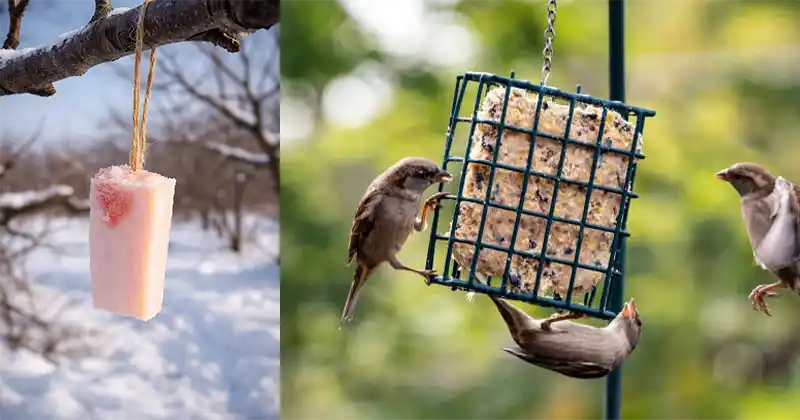
Below is a complete, original guide explaining why this method works, how to use it correctly, which trees benefit most, and how to avoid common mistakes.
Why Hanging Fat in Trees Works
During cold seasons and early spring, food is scarce for many wild birds. At the same time, insect eggs, larvae, and overwintering pests are hidden in bark, buds, and soil around fruit trees.
Animal fat is:
- Extremely high in energy
- Easy for birds to detect
- Valuable during cold months and breeding season
When birds repeatedly visit a tree to feed on the fat, they do something even more important:
They search the branches, bark, and buds for insects, larvae, eggs, and caterpillars.
This creates a natural protection system:
- Fat attracts birds
- Birds stay longer in the tree
- Birds hunt insects while feeding
- Pest populations decrease before spring growth
Instead of killing insects chemically, the ecosystem is gently rebalanced.
What Kind of Birds Does This Attract?
The method mainly attracts small and medium insect‑eating birds, such as:
- Tits (great tit, blue tit)
- Chickadees
- Nuthatches
- Woodpeckers (small species)
- Robins (seasonally)
- Sparrows (occasionally)
Many of these birds can eat hundreds of insects per day, especially when feeding chicks.
What Pests Can Be Reduced This Way?
Bird activity helps control:
- Aphids
- Codling moth larvae
- Apple maggots
- Caterpillars
- Leaf miners
- Scale insects
- Bark beetle larvae
- Spider mites (indirectly)
- Overwintering insect eggs
It does not eliminate pests completely, but it can significantly reduce early infestations, which is when trees are most vulnerable.
Which Fruit Trees Benefit Most?
This method works best on trees that:
- Have woody branches
- Host common insect pests
- Are visited by birds naturally
Most suitable trees
- Apple
- Pear
- Plum
- Cherry
- Peach
- Apricot
- Nectarine
- Quince
- Walnut
- Fig
- Mulberry
Also useful for
- Berry bushes (currant, gooseberry, blueberry)
- Grape vines (near trunks)
- Olive trees (in mild climates)
It is less useful for very young saplings or very thin ornamental trees.
When Is the Best Time to Hang Fat?
Timing matters.
Best seasons
- Late autumn
- Winter
- Very early spring
These are the periods when:
- Natural food is limited
- Insects are hidden in trees
- Birds actively search for high‑energy food
Avoid
- Hot summer months
- Late spring heat
Fat spoils quickly in warm temperatures and can attract unwanted animals.
What Type of Fat Should Be Used?
Recommended
- Raw beef fat (suet)
- Unsalted pork fat
- Unseasoned animal fat scraps
Avoid
- Salted fat or bacon
- Cooked fat with spices
- Processed meat
- Fat mixed with bread or sugar
Salt and spices can harm birds.
How to Do It Correctly (Step by Step)
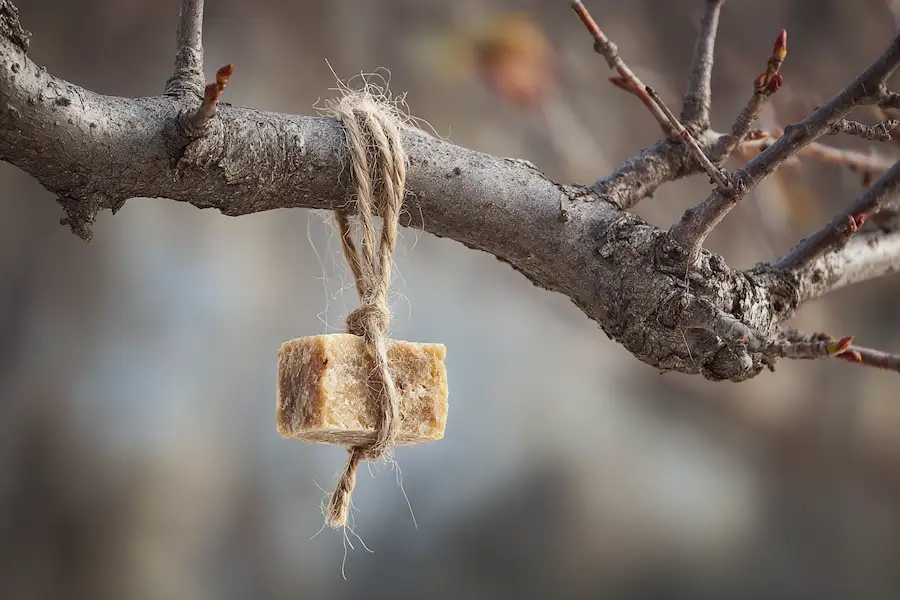
1. Cut a small piece
Size: about a walnut or small egg
Bigger is not better.
2. Attach it safely
Options:
- Natural string
- Thin wire
- Mesh feeder
Hang it:
- 1.5–2 meters above ground
- On a sturdy branch
- Away from the trunk (30–50 cm)
This reduces access by cats and rodents.
3. One piece per tree
Large trees can handle two, but spacing is important.
4. Replace when finished
Birds may consume it in days or weeks.
Remove leftovers if:
- It smells bad
- Mold appears
- Weather becomes warm
Safety and Common Mistakes
Do NOT
- Hang fat directly on the trunk
- Use plastic nets that birds can get trapped in
- Leave fat during heat waves
- Use salted or smoked products
- Overfeed in one place
Watch for
- Ant activity (move higher)
- Rats (raise height)
- Mold growth (remove immediately)
Will This Attract Predators or Pests?
If done properly:
- Birds benefit
- Trees benefit
- Risk is low
Problems appear only when:
- Fat is placed too low
- Large quantities are used
- Warm weather causes spoilage
In those cases, it may attract:
- Rats
- Stray cats
- Wasps
Correct placement avoids these issues.
How Effective Is It Compared to Sprays?
| Method | Pest control | Soil safety | Bird safety | Long‑term effect |
|---|---|---|---|---|
| Chemical sprays | High | Low | Risk | Temporary |
| Hanging fat | Medium | High | High | Improves ecosystem |
The best approach is often combining natural methods:
- Birds
- Pruning
- Healthy soil
- Manual removal
- Occasional organic sprays if needed
Extra Tips for Better Results
- Add a small bird water dish nearby
- Plant native shrubs for shelter
- Avoid pesticides
- Leave some natural habitat around the orchard
- Start every winter consistently
After 1–2 seasons, bird activity usually increases noticeably.
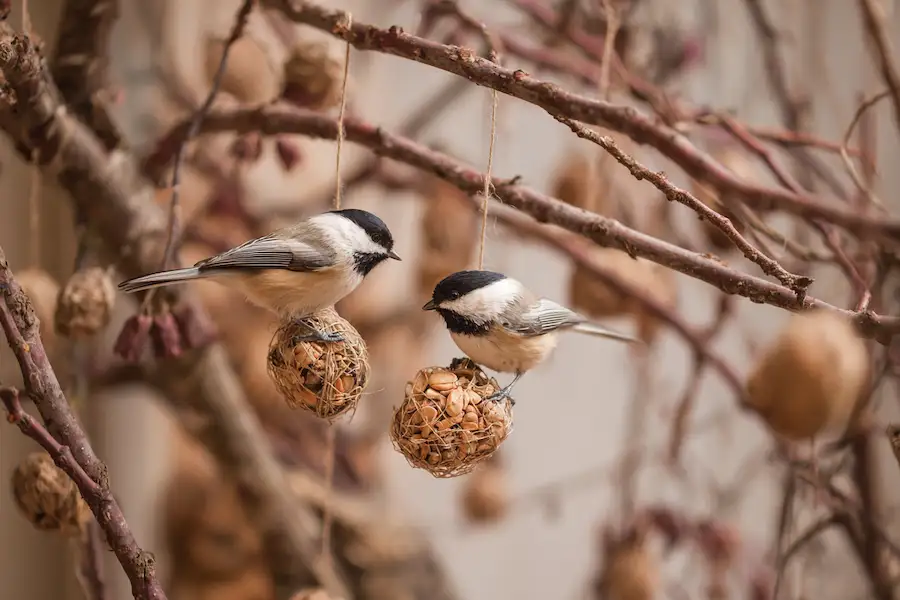
Hanging a small piece of animal fat in fruit trees is not folklore or magic. It is a simple ecological trick that turns birds into living pest‑control workers.
Used correctly, it:
- Reduces insects naturally
- Protects blossoms and fruit
- Supports wildlife
- Avoids chemicals
- Improves long‑term garden balance
It will not replace all pest control, but it can become a powerful part of a clean, low‑intervention orchard system.