Root Zone Fertilization: The Smart Way to Feed Trees for Strong Growth and Healthy Harvests
Most people believe that trees should be fertilized right at the base of the trunk. While this may seem logical, it is actually one of the most common mistakes in tree care. Trees absorb nutrients through a wide underground network of fine roots that spread far beyond the trunk. Understanding where and how to feed these roots can make a major difference in growth, fruit production, and long-term tree health.
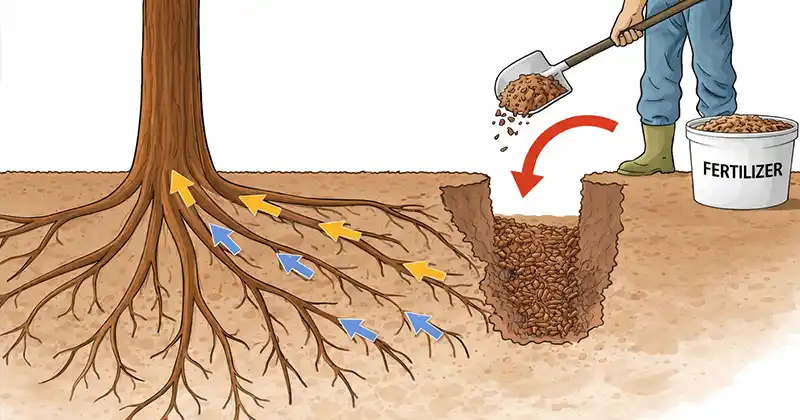
This is where root zone fertilization comes in — a method that focuses on nourishing the soil where trees truly absorb nutrients.
What Is Root Zone Fertilization?
Root zone fertilization is the practice of applying nutrients to the area of soil where a tree’s active feeder roots are located, rather than placing fertilizer directly against the trunk.
These feeder roots are responsible for absorbing:
- nitrogen
- phosphorus
- potassium
- trace minerals
- water
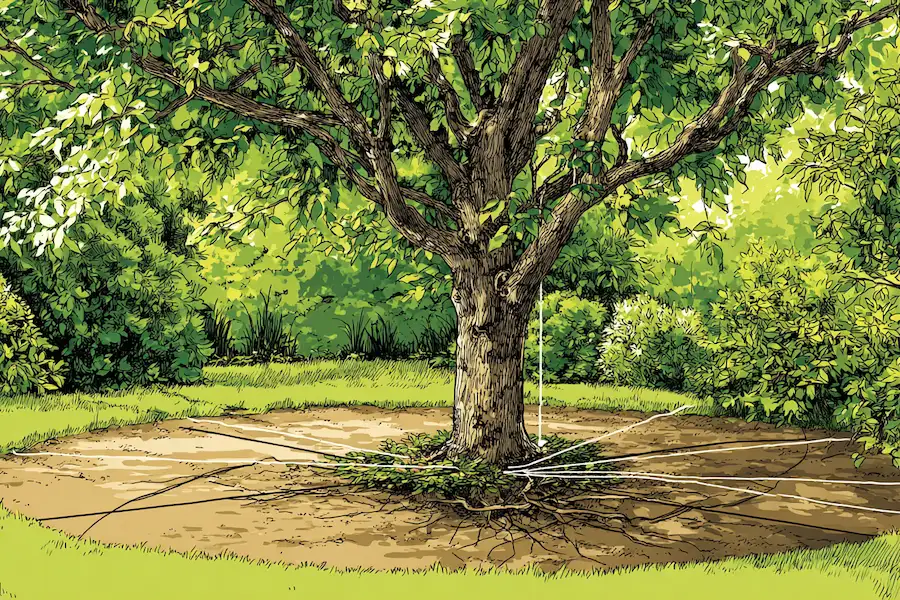
They are thin, sensitive, and spread outward horizontally, often reaching as far as the edge of the tree’s canopy and sometimes beyond.
By targeting this zone, fertilizer becomes more effective, safer for the tree, and less likely to be wasted.
Why Fertilizing at the Trunk Doesn’t Work
Placing fertilizer at the base of the tree may:
- miss the feeder roots almost entirely
- burn the bark or surface roots
- encourage trunk rot
- cause uneven nutrient uptake
- stimulate weak, unbalanced growth
The thick roots near the trunk mainly provide structure and transport — not nutrient absorption.
Where the Root Zone Is Located
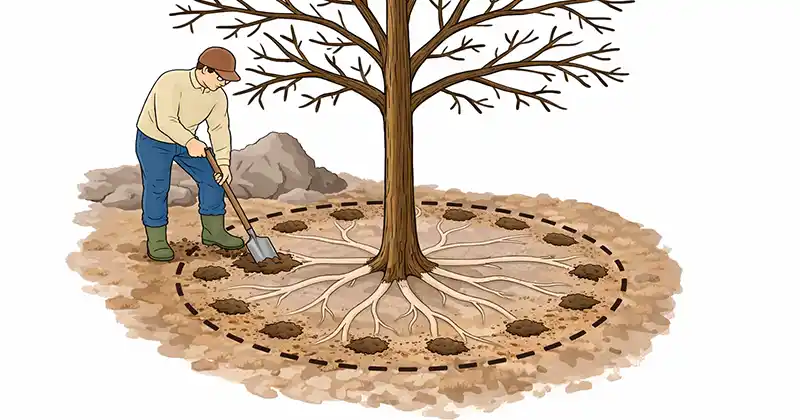
The root feeding zone is usually:
- 30–150 cm away from the trunk (depending on tree size)
- mostly in the top 15–30 cm of soil
- roughly aligned with the outer edge of the branches (called the “drip line”)
This is the ideal place to apply nutrients.
Benefits of Root Zone Fertilization
Using this method correctly can lead to:
- stronger root development
- healthier leaves
- improved flowering and fruiting
- better drought resistance
- reduced nutrient loss
- lower risk of fertilizer damage
- improved soil structure over time
It also supports beneficial soil microorganisms that help trees absorb nutrients naturally.
How to Apply Fertilizer Using the Root Zone Method
There are two simple and effective approaches.
Method 1: Surface Application (Easiest)
This is best for most home gardens.
- Measure the area under the tree canopy.
- Spread fertilizer evenly over this zone, avoiding the trunk.
- Lightly rake the surface if soil is compacted.
- Water deeply to help nutrients move into the soil.
Organic fertilizers work especially well with this method.
Method 2: Shallow Soil Holes or Trenches
Useful for compacted or poor soils.
- Make shallow holes or narrow trenches (10–20 cm deep).
- Space them evenly around the tree, under the canopy.
- Add fertilizer into the holes.
- Cover with soil.
- Water thoroughly.
Important: never dig deep near the trunk, as major roots can be damaged.
Best Types of Fertilizer for This Method
Good options include:
- compost
- well-rotted manure
- worm castings
- balanced slow-release fertilizer
- leaf mold
- bone meal (for phosphorus)
- wood ash in small amounts (for potassium)
Organic materials are safer and improve soil structure over time.
When to Fertilize
The best times are:
- early spring (before strong growth starts)
- late autumn (for root development)
Avoid fertilizing during:
- extreme heat
- drought
- late summer (may cause soft growth before winter)
Common Mistakes to Avoid
- applying fertilizer directly to the trunk
- using excessive nitrogen
- digging deep holes near the base
- fertilizing stressed or diseased trees heavily
- fertilizing repeatedly without observing tree response
More fertilizer does not mean better results.
Does Every Tree Need Fertilizer?
Not always.
Trees growing in healthy, rich soil often do well without extra feeding. Signs that fertilization may help include:
- pale or yellowing leaves
- slow growth
- small fruit
- sparse foliage
- poor flowering
Soil testing can provide the most accurate guidance.
Root zone fertilization is a simple but powerful technique that works with the natural structure of trees instead of against it. By feeding the soil where nutrient absorption truly happens, you support stronger roots, healthier growth, and more productive trees for many years.
This method requires no expensive tools, only proper placement, patience, and consistency — and it can dramatically improve the results of any fertilization program.