A $4 “Toad House” That Helps With Garden Pests (and How to Make It Actually Work)
If you garden without wanting to spray chemicals, you’ve probably wished for a helper that works while you sleep. Toads can be that helper. They’re not a magic shield against every problem, but in many gardens a resident toad becomes steady, low-maintenance pest control—especially for pests that crawl, hop, or hunt near the soil surface.
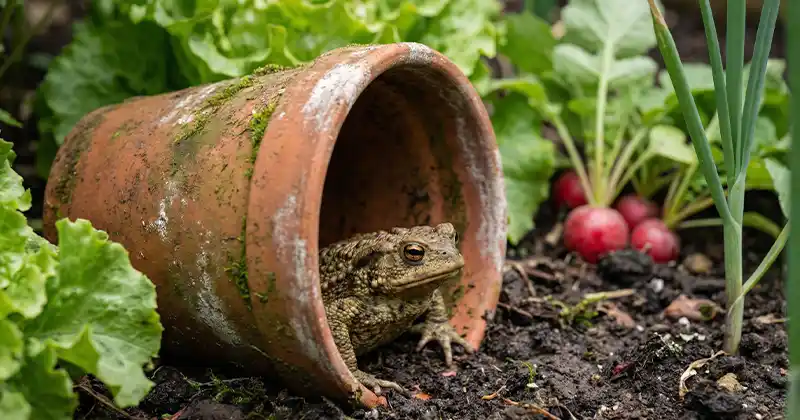
What toads really do for a garden
Toads are opportunistic nighttime hunters. They sit still, then snap up whatever moves within reach. Their menu depends on what’s available, but it often includes many common garden nuisances:
- slugs (especially small ones) and snails
- cutworms and other caterpillars that travel at night
- beetles and beetle larvae they can catch at ground level
- earwigs
- ants, crickets, and various “lawn” insects
- sowbugs/pillbugs and other small invertebrates
A healthy toad can eat a lot in one evening, but exact numbers vary with species, size, temperature, and prey availability. Think of toads as consistent pressure on pest populations rather than a guaranteed “X insects per night” solution. They are most helpful when you already have a living, diverse garden with some cover and moisture.
Also important: toads do best on ground-level pests. They’re less effective against pests that live high on plants (like many aphids on tender tips) unless those pests fall to the ground.
Why a simple shelter matters
Toads spend daylight hours hiding from heat and dehydration. They have permeable skin and lose water easily, so they seek cool, damp, shaded places. In many tidy gardens, those safe hiding spots don’t exist. Give a toad a reliable shelter close to food, and it’s far more likely to stay.
The classic “toad house” can be as simple as a broken terracotta pot.
The 30-second build (three easy options)
Choose a terracotta pot about 15–20 cm (6–8 inches) wide. Clay “breathes” and stays cooler than plastic.
Option 1: Upside-down pot with a doorway
Break or chip a notch in the rim—about 7–8 cm (3 inches) wide—then place the pot upside down on the ground.
Option 2: Pot on its side
Lay the pot on its side and prop it slightly with a stone so it doesn’t roll, leaving a stable entrance.
Option 3: Use a cracked pot
A naturally cracked pot can work if the opening is large enough for a toad to enter and exit easily.
That’s it. No bedding, no food inside, no fancy interior.
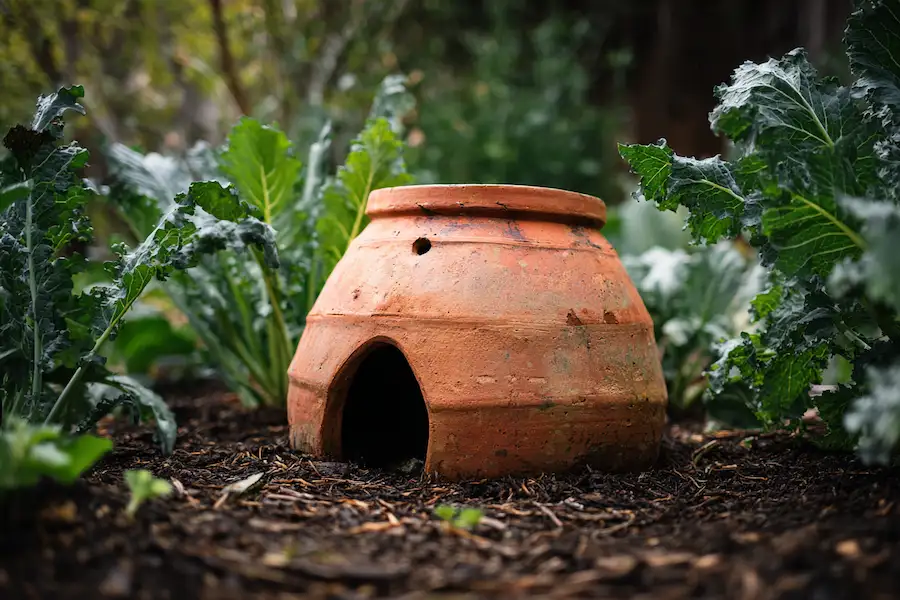
Placement rules that make or break success
Most “toad house doesn’t work” stories come down to placement. Focus on four things:
1) Shade is non-negotiable
Place the shelter in full shade or at least strong morning shade. Avoid hot afternoon sun. A toad house that heats up is a toad house that gets abandoned.
2) Put it on soil that can hold moisture
Set it on bare soil or thin leaf litter, not on gravel or a thick, dry mulch layer. Toads absorb water through specialized areas of their skin (often called a “pelvic patch”) by pressing against damp ground. Moist soil nearby matters.
3) Keep it close to where pests are
Put it near your beds—within a few meters is ideal. Toads generally hunt where they feel safe and don’t want to cross big open, dry spaces.
4) Provide nearby water—safely
Toads breed in water and benefit from a nearby source. You don’t need a pond, but a shallow dish or birdbath can help. If you use a dish, add a few stones or a rough surface so animals can climb out easily. Keep it clean and shallow to reduce mosquito breeding.
How to “invite” toads without doing anything weird
The best approach is to make your garden welcoming and let local toads discover it.
- Avoid broad-spectrum pesticides (including many insecticides and slug killers). Amphibians are sensitive to chemicals.
- Keep some natural cover: a log, a flat rock, dense groundcover, or a small messy corner gives shelter and hunting edges.
- Water thoughtfully: a lightly damp zone in shade is more attractive than a bone-dry landscape.
- Don’t relocate toads from far away: moving wildlife can stress the animal and spread disease. Let local populations move naturally.
Timing and expectations
You can set up a shelter any time the ground isn’t frozen. In many places, toads become more active as nights warm in spring and after rains. If a toad finds a safe, cool daytime hideout near food, it may return regularly and sometimes reuse that shelter for years.
Expect gradual results. A toad won’t erase an outbreak overnight, but over a season it can meaningfully reduce the number of pests that survive long enough to reproduce—especially in gardens where you’re already building healthy soil and biodiversity.
A few quick cautions
- Toads can eat beneficial insects too. They’re generalists. In a balanced garden, that usually evens out.
- Keep pets from mouthing toads. Many toads secrete mild toxins that can irritate a dog’s mouth.
- Avoid leaving deep holes, steep-sided buckets, or uncovered window wells where amphibians can get trapped.
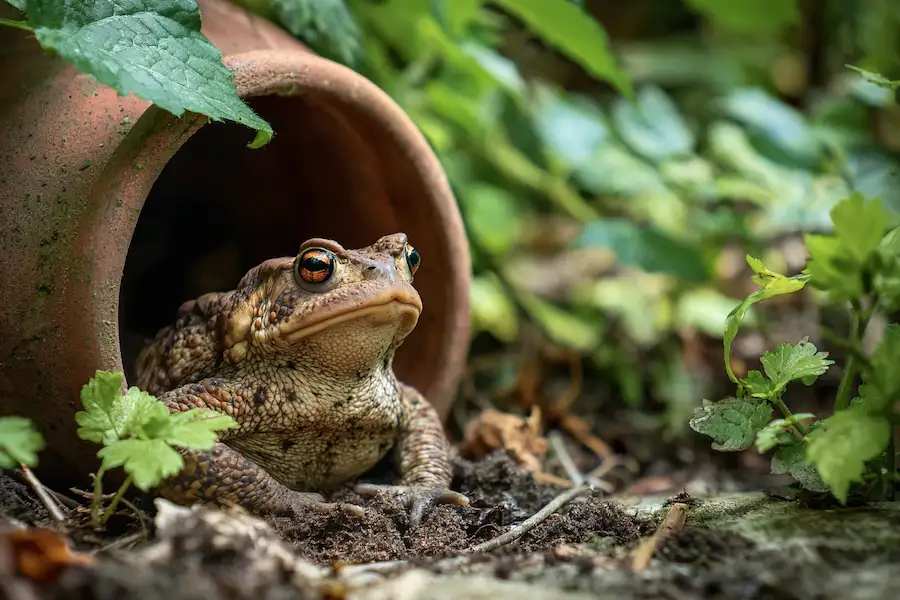
A terracotta-pot “toad house” is simple, cheap, and surprisingly effective when placed correctly: cool shade, damp soil, close to the beds, and a safe water option nearby. The real power isn’t the pot itself—it’s that you’re building habitat for a resident predator that works for free, every night, without chemicals.