Don’t Throw Away Your Eggshells: Why Gardeners Are Hanging Bags of Them Outside
If you use eggs regularly, you may be throwing away something that can eventually become useful in the garden.
Eggshells are made primarily of calcium carbonate, and instead of sending them straight to the trash, some gardeners collect them in a breathable mesh bag and hang the bag in a dry, protected area of the garden.
At first glance, it looks strange.
Why would anyone hang a bag filled with eggshells among their plants?
The answer is surprisingly practical.
The hanging bag is primarily an easy way to collect, dry, and store eggshells until you have enough to crush, compost, or use as a slow-release soil amendment.
And when they’re prepared correctly, those discarded shells can become a useful addition to your gardening routine.
Why Hang Eggshells Instead of Keeping Them in a Container?
Fresh eggshells often contain traces of egg white and moisture.
If they’re immediately thrown into a closed container, they can develop unpleasant odors and attract insects.
A breathable mesh bag allows air to circulate around the shells.
Over time, they become:
- Drier
- More brittle
- Easier to crush
- Easier to store
- Less likely to develop unpleasant odors
The method also creates a convenient collection point. Instead of crushing two or three shells every morning, you can accumulate a larger batch and process them all at once.
For the best results, rinse shells first and allow excess moisture to drain before adding them to the bag.
What Makes Eggshells Useful in the Garden?
The main component of eggshells is calcium carbonate.
Calcium is an essential plant nutrient involved in building strong cell walls and supporting normal plant development.
Plants obtain calcium through their roots from the soil.
However, there’s an important detail gardeners should understand:
Large eggshell pieces break down very slowly.
Simply placing half-shells around plants won’t provide an immediate calcium boost.
The smaller the particles, the more surface area soil organisms and natural acids can act upon.
That’s why dried shells are much more useful when finely crushed or ground before being incorporated into soil or compost.
1. Turn Them Into Eggshell Powder
Once your hanging shells are completely dry, one of the best ways to use them is to grind them.
You can use:
- A mortar and pestle
- Food processor
- Coffee grinder
- Rolling pin
Aim for a fine, gritty powder rather than large pieces.
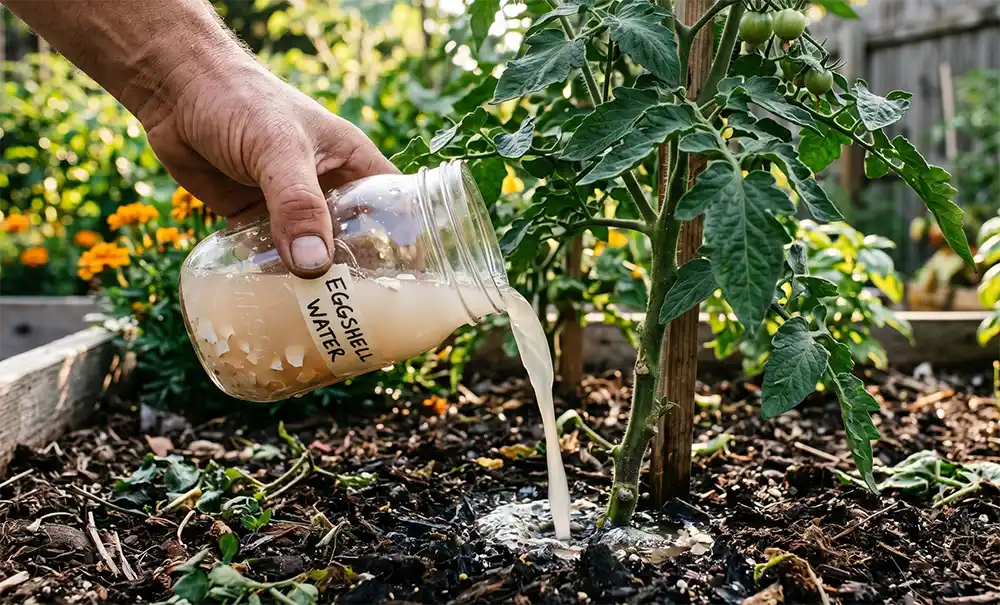
The powder can then be lightly incorporated into garden soil.
Because calcium carbonate isn’t instantly soluble, think of eggshell powder as a slow soil amendment, not a fast-acting fertilizer.
2. Add Them to Your Compost
This may be the easiest use of all.
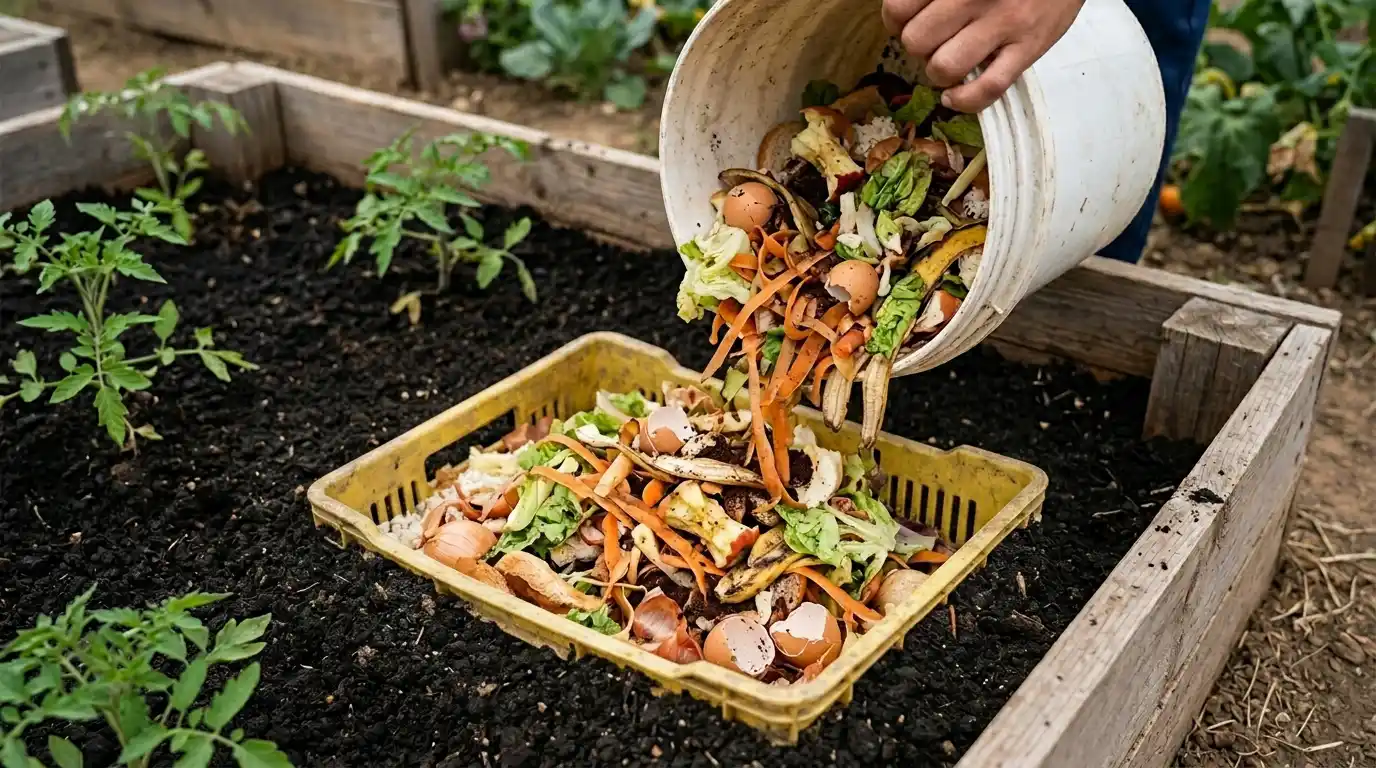
Crushed eggshells can go directly into a compost pile or compost bin.
As organic materials decompose, the shells gradually become incorporated into the finished compost.
Grinding or crushing them beforehand helps considerably.
Otherwise, recognizable shell fragments may remain in finished compost for a long time.
3. Add Them to a Worm Bin
Finely powdered eggshells can also be useful in vermicomposting systems.
Small amounts provide mineral grit that worms can use during digestion.
The key word is finely.
Large, sharp shell pieces aren’t nearly as useful as thoroughly crushed or powdered shells.
Sprinkle small amounts periodically rather than dumping a large quantity into one location.
4. Use Them When Preparing New Garden Beds
If you’re creating a new vegetable bed or refreshing existing soil, finely ground eggshells can be mixed with compost and other organic amendments.
They’re particularly appropriate when a soil test indicates that additional calcium is needed.
Remember that eggshells can also influence soil chemistry over time because calcium carbonate has a liming effect.
For that reason, more isn’t automatically better.
5. Save Them for Tomato and Pepper Beds—But Know Their Limitations
Eggshells are frequently recommended for tomatoes and peppers because calcium deficiency is associated with blossom-end rot.
However, there’s a common misunderstanding here.
Blossom-end rot doesn’t necessarily mean your garden soil lacks calcium.
Often, calcium is already present but the plant can’t absorb or transport it properly because soil moisture fluctuates dramatically.
Therefore, throwing eggshells around a tomato plant isn’t an instant cure.
For preventing blossom-end rot, your priorities should be:
- Maintain consistent soil moisture.
- Mulch around plants.
- Avoid damaging roots.
- Don’t overfertilize with nitrogen.
- Test the soil if calcium deficiency is suspected.
Eggshells can contribute calcium gradually, but good watering practices remain extremely important.
6. Can Eggshells Stop Slugs and Snails?
You’ve probably seen gardeners creating circles of crushed eggshells around plants.
The theory is that the rough edges discourage slugs and snails from crossing.
Unfortunately, this method isn’t consistently reliable.
Determined slugs can travel across eggshell fragments, particularly when the material becomes wet.
You can experiment with it, but don’t depend on eggshells as your primary slug-control strategy.
7. Can Hanging Eggshells Repel Garden Pests?
Another popular claim is that bags of eggshells repel deer, squirrels, rodents, or other animals because they supposedly smell like predators or signal danger.
There isn’t strong evidence that simply hanging clean eggshells provides dependable pest control.
If your goal is protecting vegetables from animals, physical barriers such as netting, fencing, cages, and covers are much more reliable.
The real value of hanging the shells is much simpler:
You’re drying and saving a useful garden material instead of throwing it away.
How to Make a Hanging Eggshell Bag
You don’t need anything complicated.
You’ll Need:
- Eggshells
- A breathable mesh or net bag
- String or garden twine
- A dry, sheltered location
Produce bags, reusable mesh bags, or loosely woven natural-fiber sacks can work well.
Step 1: Rinse the Shells
After cooking, rinse away remaining egg residue.
You don’t need to scrub them aggressively.
Step 2: Let Them Drain
Allow excess water to drain before putting the shells into your bag.
This reduces moisture buildup.
Step 3: Keep the Shells in Large Pieces
There’s no need to crush them immediately.
Half-shells actually allow plenty of airflow inside a loose mesh bag.
Step 4: Hang the Bag Somewhere Dry
Choose a sheltered location with good air circulation.
For example:
- Beneath a covered patio
- Inside a greenhouse
- In a ventilated shed
- Under an overhang
- In another dry garden work area
Keeping the shells relatively dry is more important than hanging them directly among vegetables.
Step 5: Keep Adding Shells
Whenever you use eggs, rinse the shells and add them to your collection.
Over several weeks, you’ll accumulate a substantial amount.
Step 6: Crush Them
Once completely dry, transfer the shells to a sturdy container and crush or grind them.
Now they’re ready for compost, worm bins, or appropriate soil use.
How Much Should You Use?
This is where gardeners sometimes go overboard.
Eggshells are useful, but your garden doesn’t need unlimited calcium.
If your soil already has adequate calcium or a relatively high pH, continually adding large quantities of calcium carbonate may be unnecessary.
For established vegetable gardens, a soil test is the best way to determine whether significant calcium amendments are actually needed.
Composting moderate household quantities of eggshells is generally a simpler approach because they become mixed with many other organic materials.
Don’t Expect Overnight Results
Eggshells aren’t comparable to a soluble liquid fertilizer.
Large fragments can remain visible in soil for years.
Even powdered shells need time to react with soil.
That’s why they’re better viewed as part of a long-term soil-building strategy.
For immediate plant nutrition, use appropriate compost or fertilizer based on your plants’ actual needs.
An Even Better Combination: Eggshells + Compost
Rather than relying on eggshells alone, combine them with a diverse compost mixture.
A healthy compost pile may contain:
- Vegetable scraps
- Coffee grounds
- Dry leaves
- Grass clippings
- Shredded cardboard
- Plant trimmings
- Crushed eggshells
Together, these ingredients produce a much more balanced amendment than eggshells could provide on their own.
One Important Safety Tip
If you’re collecting shells for weeks, don’t put dirty, egg-covered shells into a damp bag and leave them hanging.
Rinse them and keep the collection well ventilated.
If you’d prefer an extra sanitation step, shells can be thoroughly dried with heat before grinding.
Keep any grinder used for garden materials separate from equipment used for preparing food unless it can be properly cleaned and sanitized.
The Biggest Mistake Gardeners Make With Eggshells
The biggest mistake is expecting too much from them.
Eggshells are not a complete fertilizer.
They don’t contain everything tomatoes, peppers, cucumbers, flowers, or other plants require.
Their primary gardening value comes from their mineral content, particularly calcium carbonate.
Plants still need an appropriate balance of nitrogen, phosphorus, potassium, micronutrients, water, light, and healthy soil conditions.
Final Thoughts
So, should you start hanging a bag of eggshells in your garden?
If you regularly eat eggs, it’s a clever way to collect and dry something you might otherwise throw away.
The method is inexpensive, requires almost no effort, and gives you a steady supply of shells that can eventually be ground and added to compost, worm bins, or soil where appropriate.
Just don’t expect the hanging bag itself to magically fertilize nearby plants or chase every pest from the garden.
The real trick happens afterward:
Dry them. Crush them. Use them wisely.
Sometimes the simplest garden resources aren’t found in a bottle or bag at the garden center.
They’re already sitting in your kitchen.