How to Plant Parsley with Less Effort and Better Spacing
Parsley is one of those kitchen garden staples that earns its place season after season. It is useful, fragrant, productive, and surprisingly easy to grow once you understand what it needs. Still, many gardeners run into the same problem: parsley seeds are tiny, slow to germinate, and easy to sow too thickly. That often leads to wasted seed, uneven spacing, extra thinning, and more bending and fiddling in the garden than necessary.
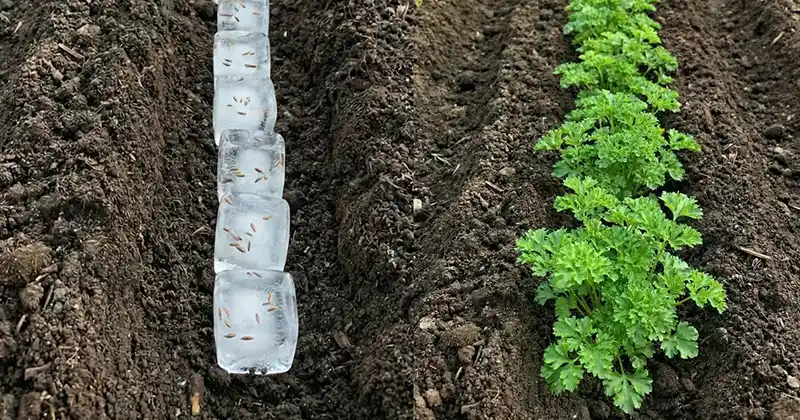
A simple planting method can make the whole process easier while improving seed placement and early moisture control. Instead of scattering seeds directly into the soil, you can pre-space them in frozen water and plant them one by one. This approach helps create neater rows, reduces the need for thinning, and makes sowing more comfortable and organized. It is especially useful for gardeners who want a cleaner planting routine and more consistent results.
In this article, you will learn how to plant parsley using a clever pre-sowing method, why it works, and how to care for the crop afterward for a healthy, abundant harvest.
Why Parsley Can Be Tricky to Grow
Parsley is not difficult, but it does ask for patience. One of the main reasons gardeners struggle with it is that the seeds germinate slowly. Even under good conditions, parsley can take 15 to 25 days to sprout. During that time, the soil needs to stay lightly moist without becoming soggy.
Another issue is seed size. Because parsley seeds are small, it is easy to sow too many in one place. When seedlings come up crowded together, they compete for space, air, and nutrients. That means extra work later, since the plants need thinning to grow well.
A more deliberate sowing method solves several of these issues at once. It helps you place seeds exactly where you want them, maintain spacing from the start, and give them a gentle supply of moisture as they settle into the soil.
A Smarter Way to Sow Parsley
This planting technique starts indoors before you ever step into the garden. The idea is simple: place one parsley seed into each compartment of an ice cube tray, fill the tray with water, and freeze it. Once frozen, the cubes become ready-made seed starters that can be placed directly into prepared garden rows.
This method offers several advantages:
Precise spacing: Each cube contains a single seed, so you control plant distance from the very beginning.
Less bending and handling: Much of the setup is done comfortably indoors, making garden work faster and easier later.
Gentle watering: As the ice melts in the soil, it moistens the seed without displacing it or creating muddy puddles.
Cleaner sowing: You avoid the common problem of accidentally dropping too many seeds in one spot.
It is a simple system, but it can save time and reduce garden effort while setting the stage for a stronger crop.
What You Will Need
To use this parsley planting method, gather the following:
- Parsley seeds
- An ice cube tray
- Water
- A bowl for carrying the frozen cubes
- Prepared garden soil
That is all you need. It is a low-cost and practical way to organize sowing before planting day.
How to Prepare the Frozen Parsley Seeds
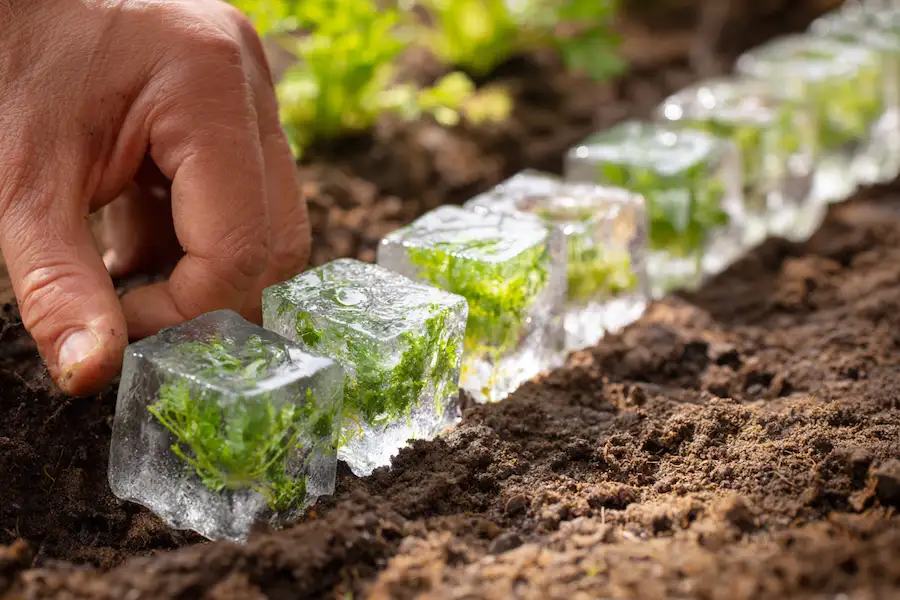
Start by placing one parsley seed into each compartment of the ice cube tray. The goal here is accuracy. By working seed by seed, you ensure a precise layout later in the garden, which helps avoid crowding and unnecessary thinning.
Once each compartment has a seed, fill the tray with water. Do this carefully so the seeds stay in place. Then place the tray in the freezer until the water is fully frozen.
After freezing, remove the parsley seed cubes and transfer them to a bowl. They are now ready to bring outside and plant.
This small bit of preparation can make sowing much more efficient, especially if you are planting multiple rows.
How to Plant the Frozen Parsley Cubes
Parsley grows best in loose, crumbly soil. Before planting, prepare your bed so the soil is broken up and free from large clumps. Good soil texture matters because parsley seedlings are delicate at the beginning and emerge more easily in a fine seedbed.
Next, make a shallow furrow about 1 centimeter deep. This is deep enough to protect the seed while still allowing it to emerge without struggle.
Place the frozen cubes directly into the furrow. Space them about 3 to 5 centimeters apart. This gives each plant enough room to develop while still allowing for a productive row.
If you are planting more than one row, leave 20 to 30 centimeters between rows. That spacing gives you room for airflow, maintenance, and harvesting.
Once the cubes are in place, cover them with a thin layer of soil. Do not bury them too deeply. Parsley seeds already take time to sprout, and planting them too deep can slow things down even more.
As the ice melts, it delivers moisture exactly where the seed needs it. Because the water releases gradually, the seed is less likely to shift position, and the soil surface is less likely to turn into a muddy crust.
Why the Ice Method Works
At first glance, planting seeds in ice may seem unusual, but it makes practical sense.
Parsley is a cold-resistant plant, and its seeds can tolerate low temperatures. That means a brief period of freezing before sowing does not harm them. In the garden, the melting ice acts as a controlled first watering. Rather than pouring water over a fresh row and risking washed-out seeds, you start with moisture built in.
This also helps with consistency. Each seed begins with nearly the same amount of water and the same depth, which can contribute to a more even stand of seedlings.
For gardeners who deal with back strain or simply want a more organized sowing process, this method also reduces the amount of crouching, pinching, and re-sowing often involved in direct seeding tiny herbs.
Caring for Parsley After Planting
Once planted, parsley needs steady but moderate care.
The most important thing is to keep the soil lightly moist while waiting for germination. Do not let it dry out completely, but avoid waterlogging. Parsley appreciates moisture, yet overly wet soil can slow development and cause problems for young seedlings.
Because parsley germinates slowly, patience is essential. It may take two to three weeks, and sometimes a little longer depending on temperature and conditions. Do not assume the seeds failed too quickly.
As the plants grow, keep the bed free of weeds so the young parsley does not have to compete for light, water, and nutrients. If your spacing was done correctly at planting time, there should be very little thinning needed later.
Harvesting for Long-Term Production
Parsley is a cut-and-come-again herb, which means proper harvesting encourages more growth. Instead of snipping only the top leaves, take the outer stems first and allow the center of the plant to keep producing. This helps maintain a fuller, healthier plant over time.
With good spacing, moist but well-drained soil, and regular harvesting, parsley can stay productive for a long season. A well-planned sowing method at the start often leads to a cleaner bed, stronger plants, and a more satisfying harvest later.
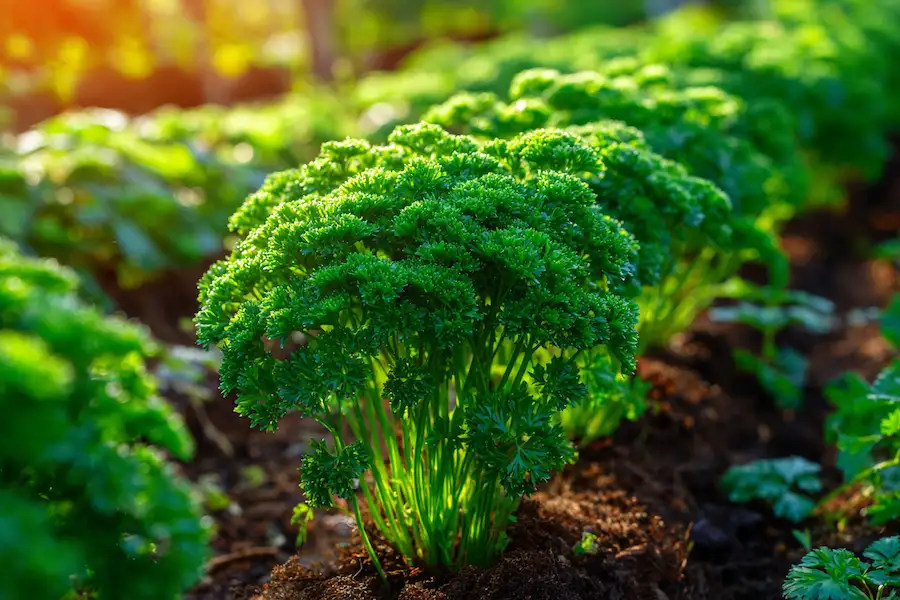
Growing parsley does not have to mean scattered seeds, crowded seedlings, and extra garden labor. By freezing one seed in each ice cube compartment and planting the cubes directly into shallow furrows, you can simplify the process from the very beginning. The method is tidy, practical, and especially helpful for gardeners who want more control with less physical effort.
It combines accurate spacing, gentle watering, and easier planting into one straightforward routine. And because parsley is slow to germinate, any method that improves consistency and reduces disturbance can make a real difference.
If your goal is to grow more parsley with less hassle, this is an easy technique worth trying in your next planting round.