Dragonflies in the Garden: More Than Mosquito Hunters
People often say a dragonfly can eat 100 mosquitoes a day, and while that number can vary, the basic idea is true: dragonflies are excellent mosquito predators. Some adults may eat dozens of mosquitoes in a day, and in good hunting conditions they can eat even more. Their aquatic young (called nymphs or naiads) also hunt mosquito larvae in water, so dragonflies help at both life stages.
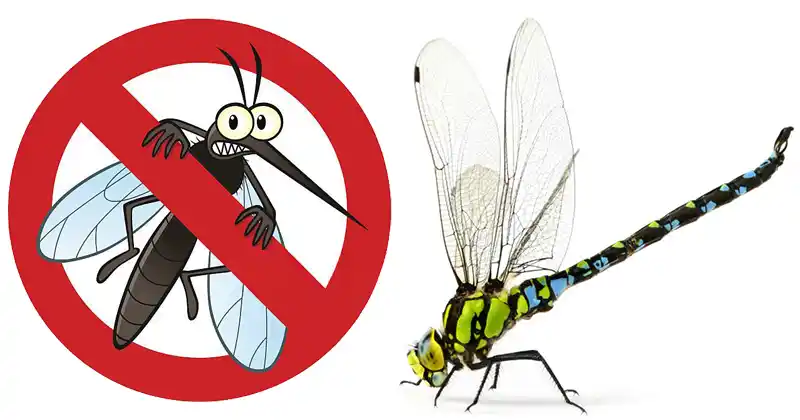
But the mosquito story is only part of why dragonflies are so valuable in a yard or garden.
Dragonflies have other important roles in a garden
1) They help control many pest insects, not just mosquitoes
Dragonflies are fast, visual hunters. In addition to mosquitoes, they commonly eat:
- gnats
- midges
- flies
- small moths
- other soft-bodied flying insects
This means they help reduce general insect pressure in the garden, especially around water features, damp areas, or lush plantings.
2) Their young help keep pond water ecosystems balanced
Dragonfly nymphs live in water for months (sometimes longer, depending on species). During that time, they prey on:
- mosquito larvae
- midge larvae
- other small aquatic insects
In a garden pond, this predatory role helps keep insect populations balanced and supports a healthier mini-ecosystem.
3) They are part of a healthy food web
Dragonflies are predators, but they are also prey. Birds, frogs, fish, and spiders may eat them. That makes dragonflies an important link in the garden food chain. A yard with dragonflies often supports a richer, more stable ecosystem overall.
4) They are a sign your habitat is improving
Dragonflies are strongly tied to water quality, vegetation structure, and low pesticide use. If dragonflies begin showing up regularly, it usually means your garden is providing:
- clean water
- shelter
- perching sites
- enough insect life to support predators
In other words, they are a good sign that your yard is becoming ecologically healthy.
5) They support natural, low-chemical gardening
Because dragonflies eat nuisance insects, they fit perfectly into a more natural pest-management approach. A dragonfly-friendly garden usually relies less on routine insecticide spraying, which helps protect pollinators and other beneficial insects too.
6) They add movement, beauty, and interest
This may not be a “biological” role, but it matters. Dragonflies bring color, motion, and a wild feel to a garden. They also make a garden more engaging for kids and adults who enjoy watching wildlife.
The most important thing to know: flowers help, but water is what really attracts dragonflies
If you want dragonflies to visit regularly, flowers alone are not enough.
Dragonflies breed in water. So the best setup is:
- a pond or small water feature
- pond-edge plants (especially upright stems)
- sunny open space for flying
- shelter from strong wind
- fewer pesticides
Flowers are still very important because they attract the smaller insects dragonflies hunt, and many flowering pond plants also provide structure for egg-laying and emergence.
Best common/popular flowers to plant to attract dragonflies
A) Pond and pond-edge flowers (highest impact)
These are the most effective because they support the dragonfly life cycle directly.
1) Water lilies
Why they help: Floating leaves and flowers create cover, resting spots, and a more natural pond surface.
Why gardeners like them: They are one of the most popular pond plants and look great all summer.
2) Pickerelweed
Why it helps: Upright stems and dense growth at the pond edge provide perches and habitat structure.
Why gardeners like it: Purple-blue flower spikes, easy to grow in wet margins, excellent for a natural pond look.
3) Iris (especially moisture-loving or native iris types)
Why it helps: Strong vertical stems are useful for perching and for newly emerged dragonflies to climb onto after leaving the water.
Why gardeners like it: Classic garden flower, bold blooms, works well along pond edges.
Tip: Choose a native or non-invasive iris for your region.
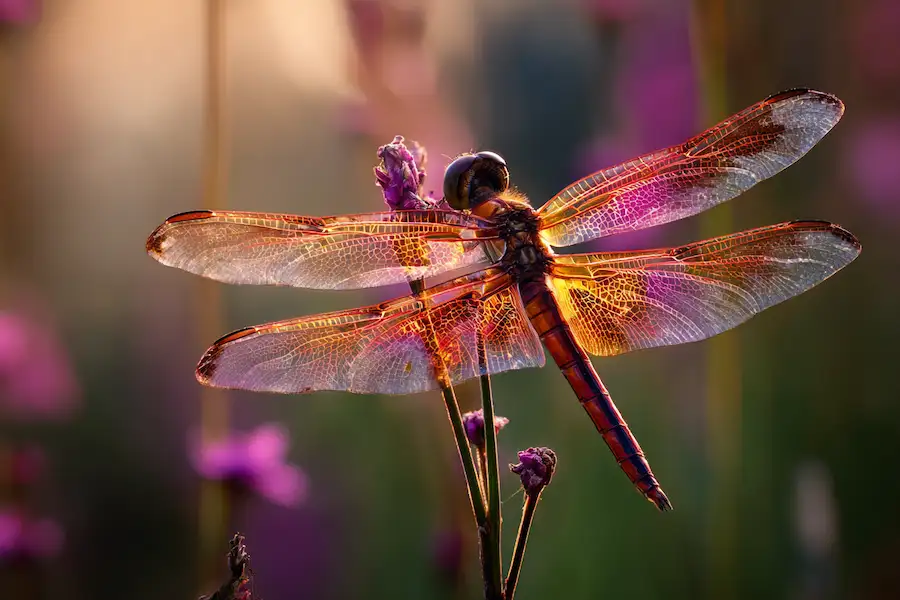
4) Cardinal flower
Why it helps: Thrives in moist soil near water and adds structure around pond edges.
Why gardeners like it: Brilliant red blooms and a favorite in wildlife gardens.
5) Marsh marigold
Why it helps: Great for wet edges and shallow water zones.
Why gardeners like it: Bright yellow flowers early in the season and a very natural wetland look.
6) Water forget-me-not
Why it helps: Excellent for pond margins, where it creates a soft flowering edge.
Why gardeners like it: Small blue flowers and a cottage-garden feel.
7) Water mint
Why it helps: Attracts lots of small insects, which dragonflies hunt.
Why gardeners like it: Fragrant and useful in wet spots.
Tip: It can spread, so plant where you can manage it.
8) Bogbean or other shallow-water flowering bog plants
Why it helps: Helps build a layered pond edge with stems and cover.
Why gardeners like it: Adds texture and flowers to the shallow zone.
B) Flowers near the pond (indirect attractors, but very useful)
These won’t replace pond plants, but they help build the insect-rich environment dragonflies love.
1) Coneflower (Echinacea)
Why it helps: Attracts bees, small flies, and other insects.
Why gardeners like it: Long bloom season, drought-tolerant once established, very popular.
2) Black-eyed Susan
Why it helps: Supports lots of insect activity in sunny borders.
Why gardeners like it: Easy, bright, and reliable.
3) Bee balm (Monarda)
Why it helps: Draws many insects and creates dense summer growth near water or in moist beds.
Why gardeners like it: Bold flowers and excellent wildlife value.
4) Joe-Pye weed
Why it helps: Tall, airy flowers attract abundant insect life; the height also gives dragonflies nearby perching/flight structure.
Why gardeners like it: A standout native-style garden plant, especially in damp soil.
5) Asters
Why it helps: Late-season blooms support insects when many flowers are fading.
Why gardeners like it: Great fall color and strong wildlife value.
6) Yarrow
Why it helps: Flat flower clusters attract many small insects.
Why gardeners like it: Easy to grow and long-blooming.
7) Verbena (especially tall or native types)
Why it helps: Strong insect attractor and good in sunny areas around a pond.
Why gardeners like it: Long flowering period and airy texture.
8) Clover and simple wildflower mixes
Why they help: Open, nectar-rich flowers bring in the tiny prey insects dragonflies feed on.
Why gardeners like them: Easy way to create a wildlife strip without a formal flower bed.
How to set up a dragonfly-friendly garden (simple version)
For the best results, combine all three:
1) Water
A small pond is ideal. Even a modest wildlife pond works better than flowers alone.
2) Structure
Add:
- pond-edge stems (iris, pickerelweed, grasses)
- a few taller plants for perching
- open sunny space for flight
3) Flowers
Use a mix of:
- pond flowers (water lily, iris, pickerelweed, cardinal flower)
- nearby insect-attracting flowers (coneflower, bee balm, asters, yarrow)
And most importantly: avoid broad insecticide use, especially around the pond.
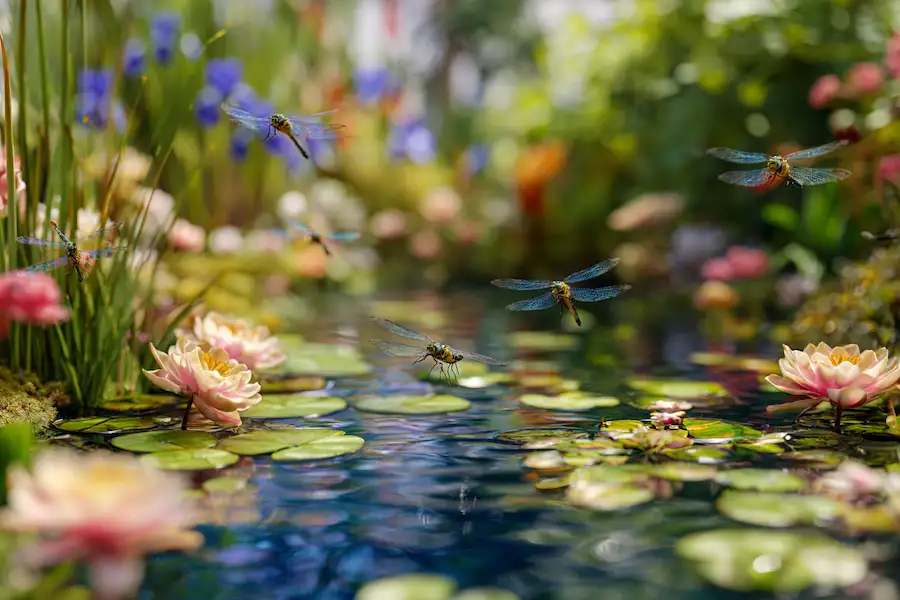
Dragonflies are not just mosquito eaters. In a garden, they act as:
- natural pest controllers
- part of a healthy pond ecosystem
- a food-web species that supports biodiversity
- a sign your habitat is thriving
If you want more dragonflies, plant flowers—but make sure you also give them what they really need: water, stems, sun, and a pesticide-light garden. That’s what turns a yard into a place dragonflies actually stay.